Teri Hill Recalls Community Behind Original ‘Rocky Horror’ Midnight Screenings
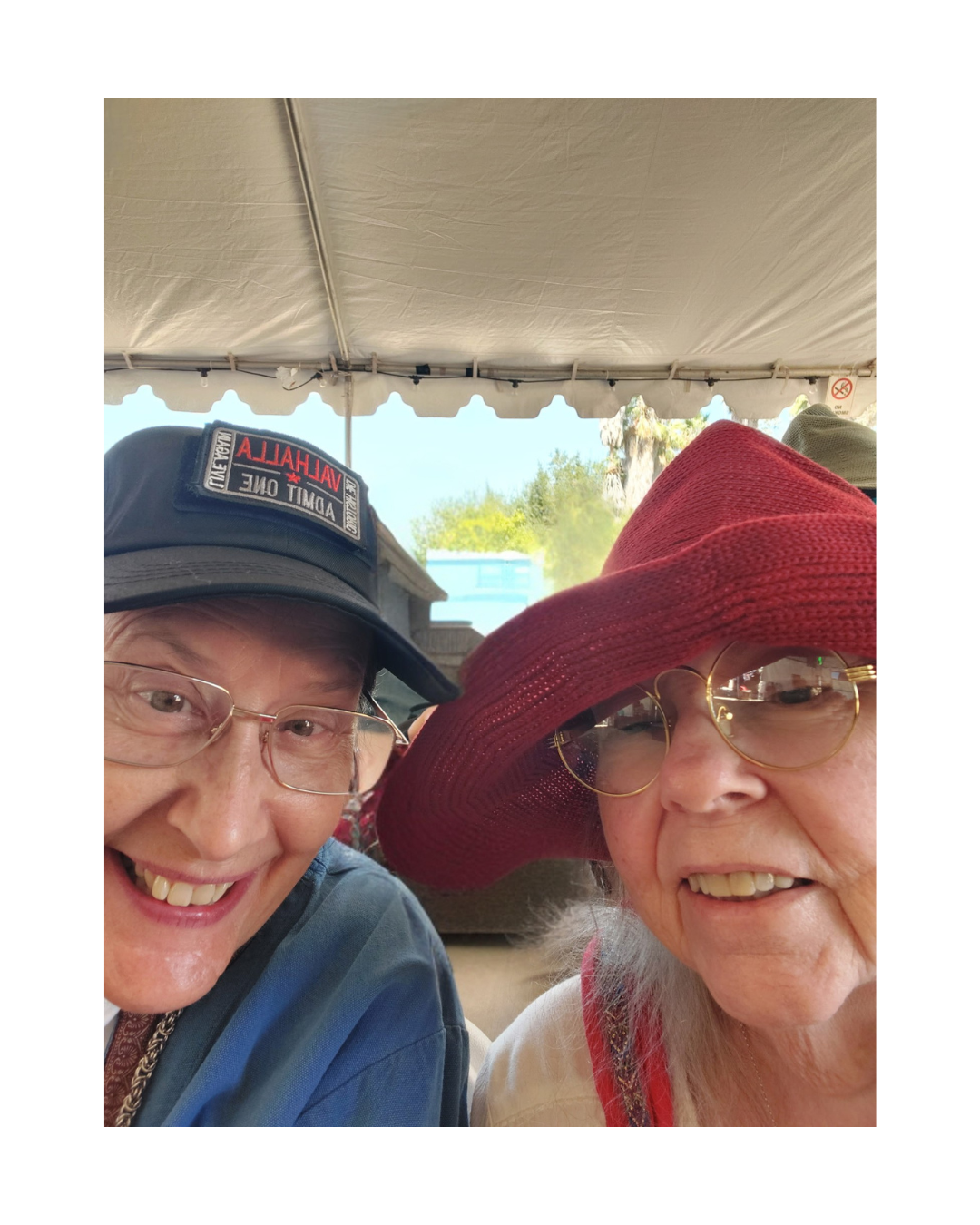
Photo of Teri Hill (R) and Karen Buck (L)
Photo Credit: Teri Hill
Throughout the late 1970s, Teri Hill regularly attended midnight screenings of “The Rocky Horror Picture Show” at the Tiffany Theater in Los Angeles, where the communal experience was central.
Richard O’Brien’s musical, “The Rocky Horror Show,” premiered in June 1973 at the Royal Court Theatre Upstairs in London. According to Joe Lynch of Billboard, the production attracted the attention of Lou Adler, president of Ode Records, who brought it to the Roxy Theatre in Los Angeles. The musical was later adapted into the film “The Rocky Horror Picture Show,” which originally struggled at the box office but eventually found a new audience through midnight screenings featuring participatory features that evolved over time: audience call-and-response, sing-alongs, and costumes. Over the past five decades, it has become one of the longest-running films in history.
For Teri Hill, a Los Angeles resident, “The Rocky Horror Picture Show” meant more than a film; her years of attending midnight screenings show how the experience evolved from passive viewing to active participation. Her experience reflects the tight-knit community and, for many LGBTQ+ individuals, the safe environment it offered for self-expression.
From the late 1970s into the 1980s, Hill attended midnight showings of “The Rocky Horror Picture Show” at the Tiffany Theater, which was permanently demolished in 2013. She recalls, “My friends Don and Peggy that I worked with at Lane Bryant were already fans, and they said, ‘You’ve got to come with us to see the movie.’” By Halloween 1977, Hill had become a regular attendee, saying, “It was just insane. I loved the songs, and I loved everything… Everyone was friendly and having fun, and there was like, it was a party atmosphere…”.
As Hill continued to attend showings, she developed relationships with the actors in shadow-cast performances, a central feature of the midnight screenings. One night, Hill listened to a conversation about a shadow-cast actor in the restroom. Unbeknownst to her at the time, one of the individuals, Karen Buck, would later become one of her closest friends. Hill recalls, “Karen was mean to me, and I was mean to her… then she went out to the parking lot, and she was talking to somebody, I don’t know, got mad and kicked my car.”
Over time, regular attendees shifted their focus from the film to the community itself. Buck says, “You wouldn’t miss it for the world. You know, you were part of that. People look forward to seeing you, you know?”
HISTORY reports that recurring midnight screenings became gathering places for fans, building a particularly strong sense of belonging among queer audiences. Buck observed this common identity at the Tiffany Theater, stating, “A lot of them [the queer community] are people that just didn’t, they just didn’t fit in with anybody else, you know? We’re looking at the outcasts, the people that were eclectic, or artistic, or fun, who really kind of just wanted to have a really good time without being judged, you know?… It was kind of just a place where anybody who just felt like they didn’t really belong anywhere else, and they kind of found their niche, their forte, or their spot to be.”
Although the Tiffany Theater was demolished in 2013, those friendships Teri Hill formed there have endured beyond the building’s existence. What began as a weekend outing to see a cult film became an opportunity to form friendships, feel a feeling of belonging, and join a tradition that has lasted for decades. For Hill, “The Rocky Horror Picture Show” midnight screenings were more than a place to watch a film; they were a place of acceptance and community.