Ticketmaster and Live Nation Face Legal Action After Fans and Artists Criticize Ticket Prices
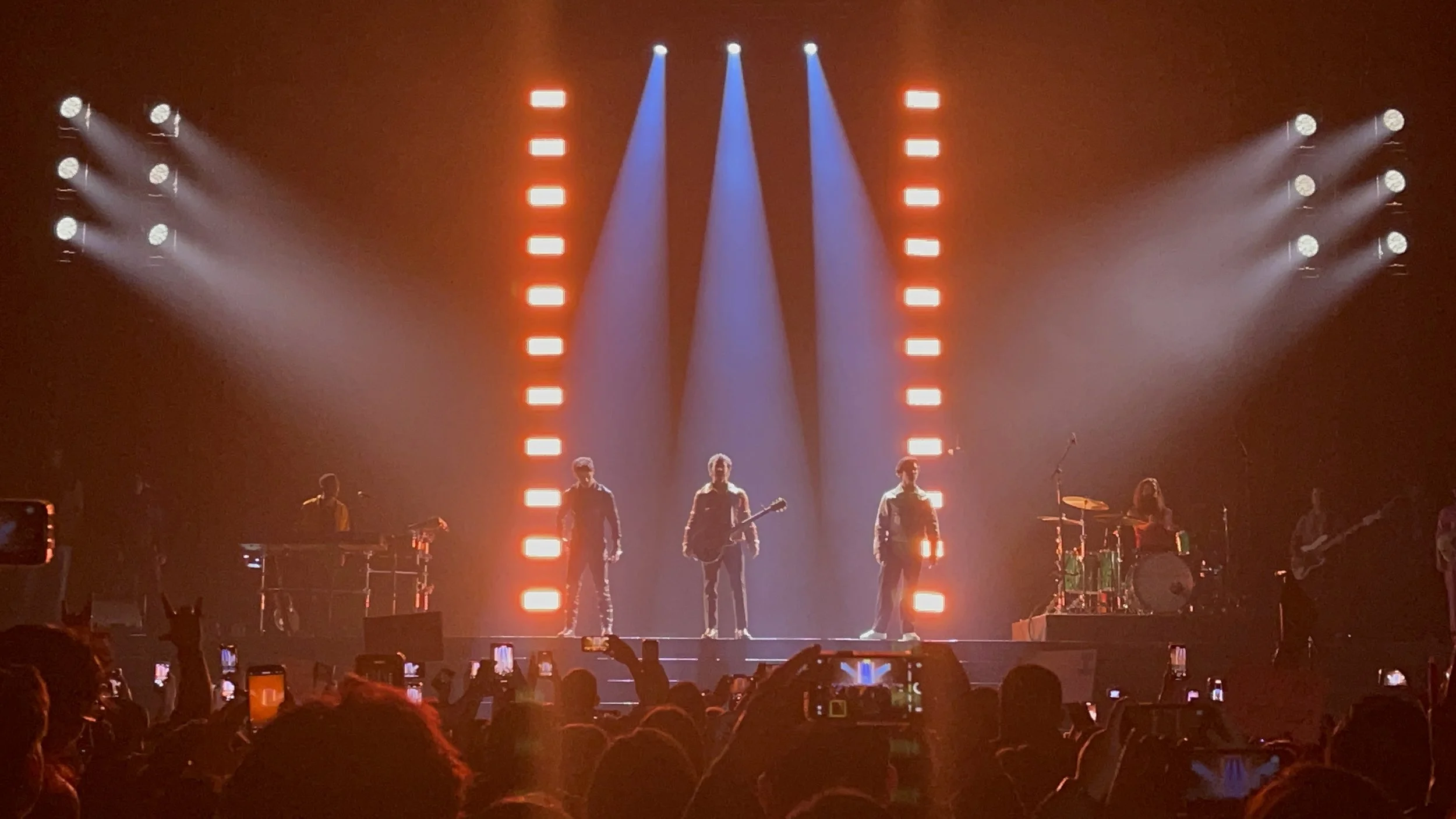
Photo credit: Allison Copley (2023)
Ticketmaster and its parent company, Live Nation, have faced legal action over allegations that they used their dominance of the live-event industry to limit competition. In contrast, consumers faced high ticket prices and fees.
Federal regulators have accused Live Nation and Ticketmaster of using their relationships with artists and venues, along with their exclusive ticketing agreements, to uphold their market position. The litigation has raised concerns about competition, pricing, and resale practices affecting concertgoers.
Fan Perspective
In a 2025 survey, Ticketmaster found that 82% of fans said ticket price was the determining factor in their purchase decisions. Ticketmaster leveraged this by eliminating seller fees for all fan resale tickets, rather than having professional ticket brokers resell on their behalf. The program launched alongside ticket sales for Taylor Swift’s “Reputation” tour. Despite the program’s launch, ticket pricing remained an issue. Ticketmaster kept dynamic pricing for the original ticket sales, adjusting prices to match market demand. In 2018, in comments to the FTC, Christian Hassold said reselling tickets should be priced higher than primary-market tickets. Hassold says they were required to sell their tickets for at least $315, even though nearby seats were $275-$300.
In addition to ticket pricing, the “Verified Fan” presale system has also drawn criticism. The system is lottery-based, emailing fans special codes to access tickets ahead of general onsale. Ticketmaster executive David Marcus said that there are ways to determine whether or not a registrant is an actual fan or a scalper: “Registering for every show is not something a normal fan would do. That’s something a bot or reseller would do because they want to get as many tickets as possible to resell.” However, for fans like Sara Pinto of Milford, Massachusetts, this may not necessarily be true. “In general, I don’t mind traveling, and for certain artists, I’m willing to go out of my way just to get a ticket, so I’ll sign up for presale codes for multiple cities so I can maximize my chances of getting a good ticket or seeing them at all.”
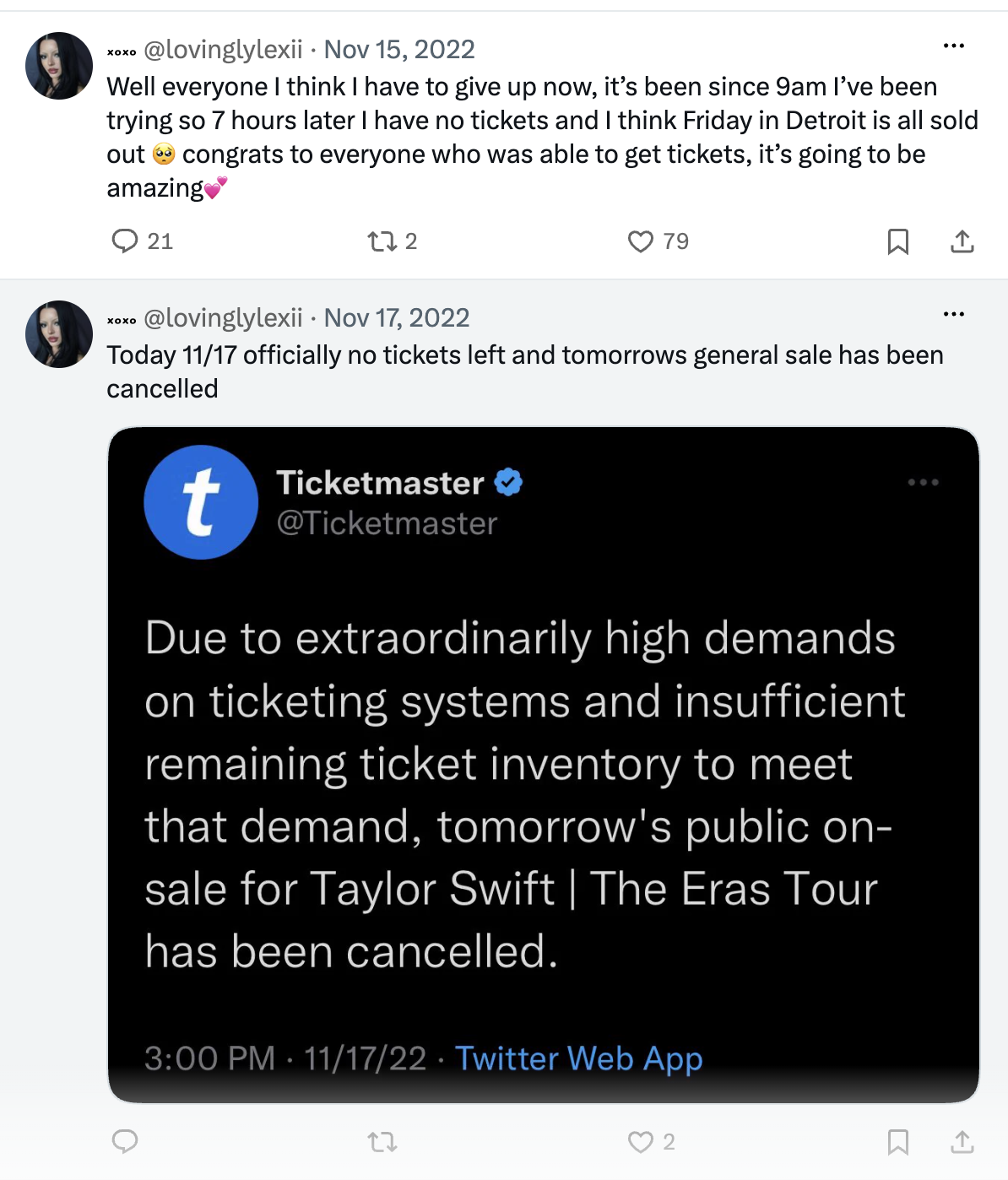
@lovinglylexii on X, November 15, 2022
Artist Perspective
Country artist Zach Bryan has criticized the company, calling his 2023 album “All My Homies Hate Ticketmaster.” Despite requesting not to perform at venues contracted with Live Nation/Ticketmaster, AEG Presents top executive and concert promoter Jay Marciano couldn’t find any in major markets. For Bryan’s next tour in 2024, he conceded the boycott and ultimately returned to performing at venues partnered with the company. “It would be very difficult to do [a tour without using Ticketmaster],” said Marciano.
Singer Olivia Dean also criticized the company after fans shared screenshots of presale tickets over $700 and resale tickets above $800. Dean condemned the company on Instagram.
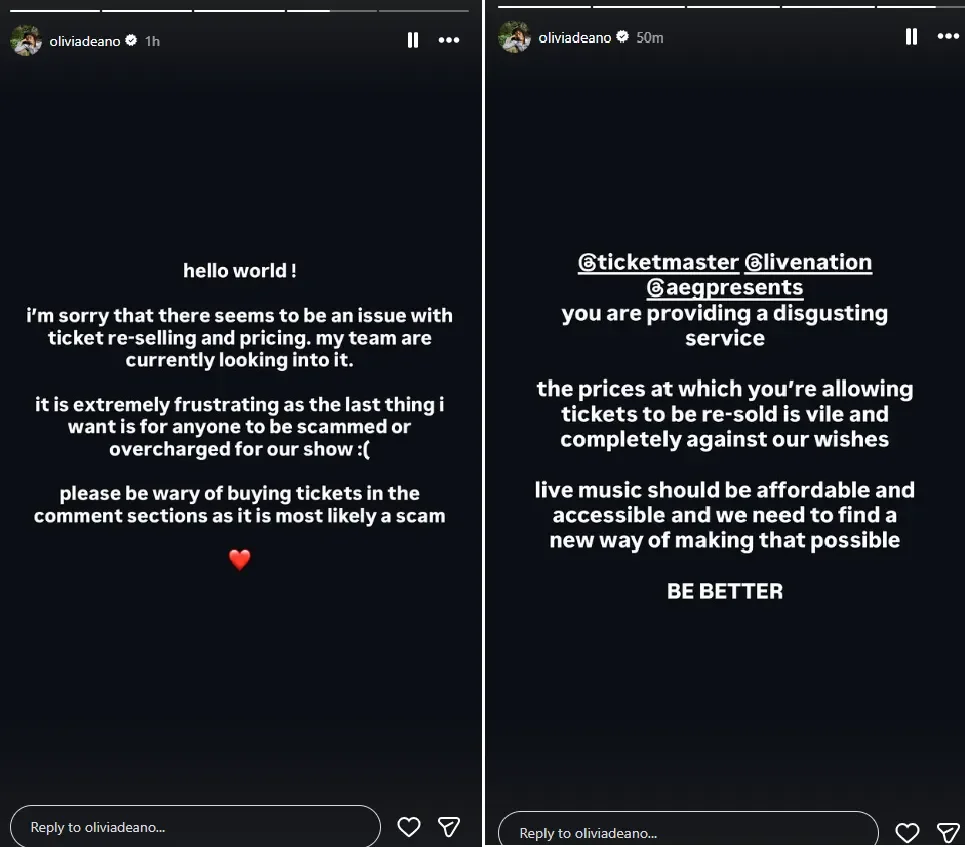
Olivia Dean via Instagram
Ticketmaster later claimed the $700+ prices were a “typo,” corrected them to $53.45, and refunded affected fans.
Ticketmaster and Live Nation Perspective
Live Nation and Ticketmaster have defended their practices on the Live Nation website by listing myths and providing evidence to combat them. For example, to dispel the myth that Ticketmaster sets ticket prices and purposefully increases them, Live Nation claims that ticketing companies do not set ticket prices; the artists and teams do. The company claims ticketing companies receive only about 5% of the total sale. The company also reports that “65% of tickets for U.S. concerts are under $100”. Regarding the assertion that it has monopolized the market, Live Nation says the company (including Ticketmaster) makes an annual net profit of 1.4%.
In 2025, Ticketmaster said artists would have more control over resale prices, with a 20% cap and authenticated listings. They also claim to block 200 million bot attempts daily.
The Ticketmaster monopoly is over, now what? (Vox via YoutTube)
Video: Vox/YouTube
Conclusion
For more details on Live Nation and Ticketmaster’s practices, visit the Federal Trade Commission’s website for updates on consumer protections.